1400 Falls Road, Valdese NC 28690 – Town of Valdese Park
Where Valdese’s Past, Present & Future Come Together
McGalliard Falls is one of Valdese’s most distinctive places to visit—combining natural beauty, local history, recreation, and easy trail access just 1.5 miles from downtown.
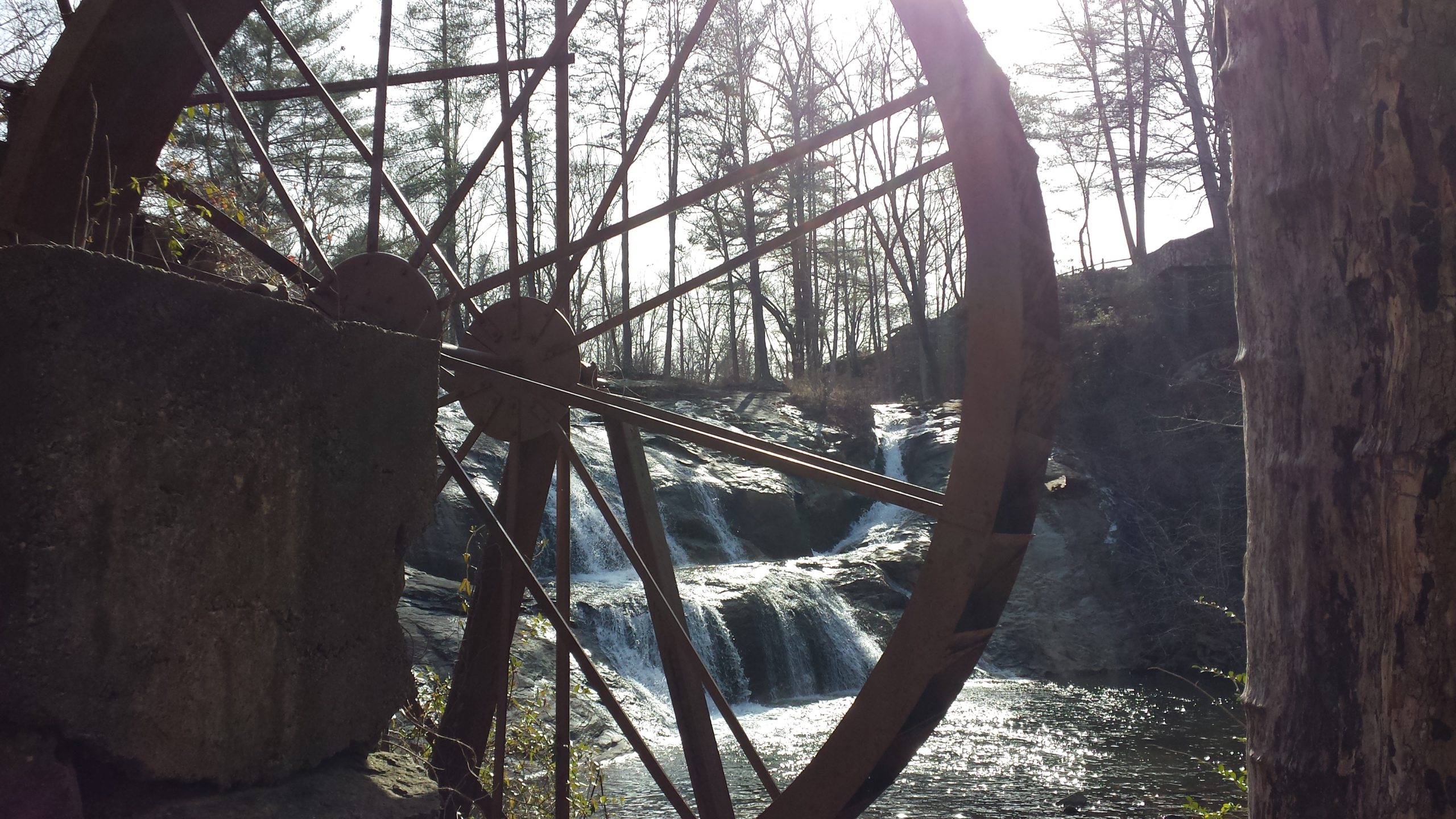
Visitors can experience the beauty of a 40-foot waterfall, discover Waldensian history at the Meytre Grist Mill, picnic beneath the trees, fish in McGalliard Creek, photograph or paint the landscape, and explore the Valdese Greenway.
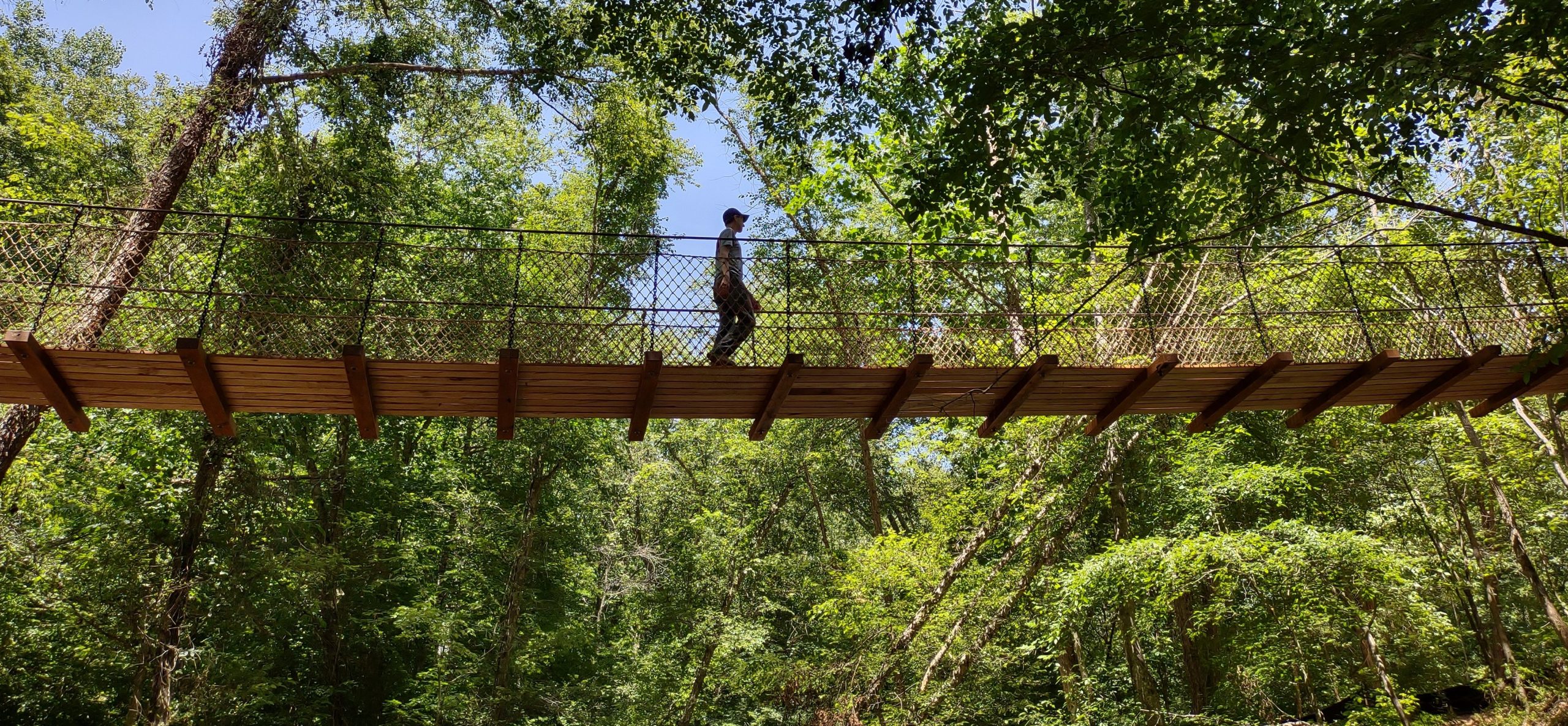
Follow the greenway about one-half mile from the park and you’ll reach the McGalliard Creek Bridge, a 160-foot suspension bridge and one of the signature features of the trail connection between McGalliard Falls Park and Valdese Lakeside Park. Continue on for an approximately two-mile trip between the two parks, with connections to the Burke River Trail and Wilderness Gateway State Trail.
Amenities: Large Picnic Shelter • Overlooks • Meytre Grist Mill • Fishing • Volleyball Court • Restrooms • Scattered Picnic Tables • Charcoal Grill • Parking • Greenway & Trail Access
People rarely fall in love with a community because of one thing. They fall in love because of the combination of experiences. McGalliard Falls is one of those places.
A Place Woven Into Valdese History

Long before McGalliard Falls became a public park, it was a gathering place.
The Waldenses settled Valdese in 1893, and early residents walked to the falls on Sunday afternoons—sometimes still dressed in their church clothes—to picnic on bread, cheese and fruit. Children played and swam in the creek below the falls.
In 1906, Fred Meytre built a grist mill beside the falls to serve local farmers. The original water wheel was destroyed during the flood of 1916, and the mill was converted to turbine power. It continued operating until the early 1940s. When McGalliard Falls Park was created decades later, the grist mill was reconstructed as a tribute to the people and industry that helped shape Valdese.
Heritage is not limited to the artifacts inside museum walls. It also includes the landscapes and gathering places that shaped daily life.
McGalliard Falls is one of those landscapes.
A Bunch of Sixth Graders Helped Save the Falls
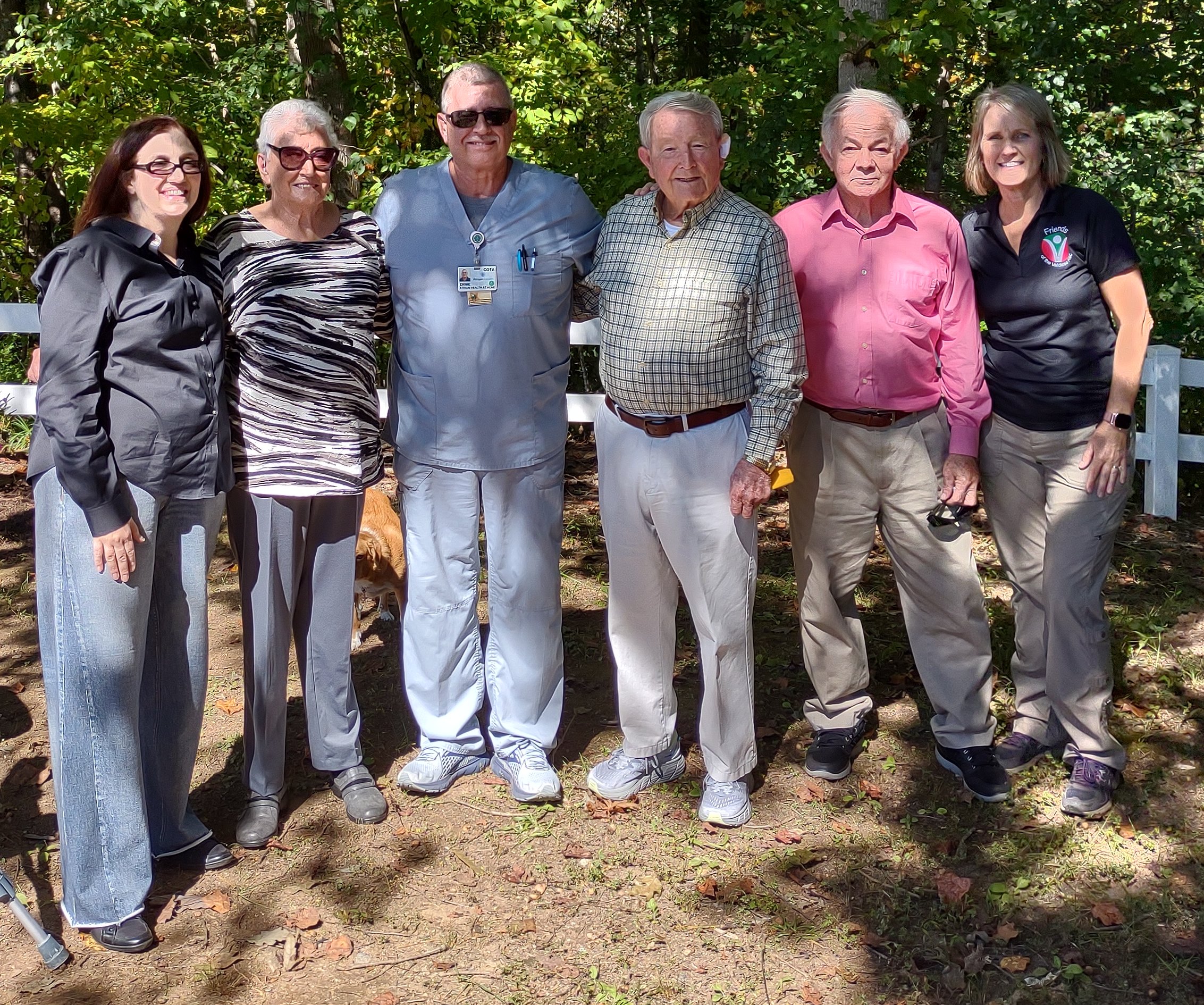
One of the best chapters in the McGalliard Falls story began in a sixth-grade classroom.
In 1979, science teacher Don Brittain’s sixth-grade students at Valdese Elementary spent a semester studying McGalliard Falls. What they found wasn’t the park we know today. The land had been used as a town dump and quarry, and the water flowing across the falls contained treated sewage and industrial dye.
The students didn’t simply study the problem. They became advocates.
They wrote to the Valdese Town Council asking the Town to save McGalliard Falls and turn the property into a park. They presented their geological, environmental and plant studies to Town leaders, helping set in motion the planning process that followed.
Picture: (l-r): Ruth Fletcher Gage, Carrie Powell, Ernie Powell, Puse Passmore, Don Brittain, Beth Zimmerman Heile Learn more
Three years later, on October 5, 1982, Governor Jim Hunt joined local leaders and residents for the dedication of McGalliard Falls Park. The original park included overlooks, a picnic shelter, tennis courts, softball fields, a nature trail, playground and bridge across the creek. Funding included a matching grant from the federal Land and Water Conservation Fund.
The lesson from 1979 still matters:
A community can look at a place as it exists today and imagine something better.
From an Old Park to a New Park
For decades, McGalliard Falls stood largely on its own. Then another generation began imagining what could happen along McGalliard Creek. Friends of the Valdese Rec was formed in 2015 around the effort to preserve approximately 300 acres along McGalliard Creek and Lake Rhodhiss for what would become Valdese Lakeside Park.
That created an extraordinary opportunity: connect Valdese’s historic park to its newest park.
On July 14, 2022, more than 100 people gathered to celebrate the opening of the McGalliard Creek Bridge, a 160-foot catenary suspension bridge over the creek. The bridge completed the two-mile Valdese Greenway connecting McGalliard Falls Park with Valdese Lakeside Park. The bridge did much more than connect two pieces of land.
It connected old and new.
It connected history and recreation.
And it made McGalliard Falls part of something much larger.
Connected to Something Bigger
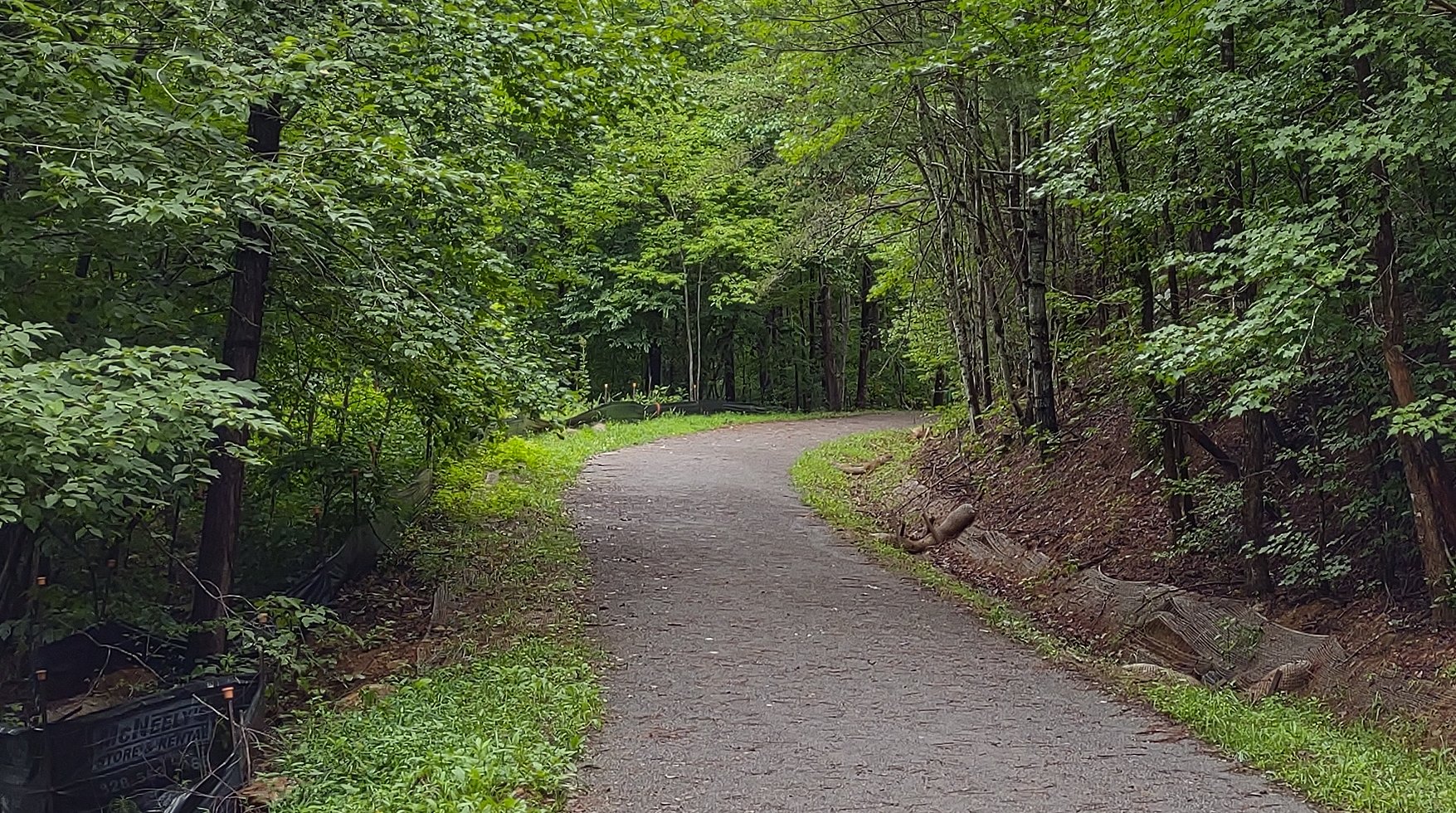
Today, the two-mile Valdese Greenway follows McGalliard Creek and Lake Rhodhiss between McGalliard Falls Park and Valdese Lakeside Park. The McGalliard Creek Bridge is approximately one-half mile from McGalliard Falls.
The greenway is also part of two larger trail visions:
Burke River Trail – a developing 40-mile trail connecting communities across Burke County.
Wilderness Gateway State Trail – a North Carolina State Trail that will connect destinations across this part of western North Carolina, with a loop through Valdese.
That changes the role McGalliard Falls can play.
It is no longer simply a neighborhood park or a pretty waterfall. It can become an important trailhead, heritage destination and gateway into Valdese—a place where someone who comes for a hike discovers the grist mill, someone who comes for history discovers the trail, and someone who comes for the waterfall discovers downtown.
Planning for the Next Chapter
Friends of the Valdese Rec, the Waldensian Heritage Foundation, and the Burke River Trail Association have partnered to fund and contract with Destination by Design to develop a comprehensive Master Park Plan for McGalliard Falls Park.
The planning process will bring together the park’s history, natural resources, recreation, trail connections, art, education, and community gathering opportunities into one long-term vision. Community input will be an important part of the process, helping determine what should be preserved, what could be improved, and what McGalliard Falls might become for the next generation.
What Could McGalliard Falls Become Next?
The park celebrated its 40th anniversary in 2022. After four decades of serving residents and visitors, it is time to think about its next chapter.
That does not mean changing what people love about McGalliard Falls.
It means asking how we can protect those things while making the entire experience better.
A future master planning process can look holistically at possibilities such as:
- safer circulation and better accessibility
- improved arrival, parking and trailhead experience
- better connections among areas of the park
- historic interpretation and enhancements around the Meytre Grist Mill
- educational programming and outdoor learning spaces
- improved creek access
- landscaping and natural resource stewardship
- picnic and community gathering areas
- recreation and ballfield improvements
- restrooms and other facilities positioned and designed for today’s park users
- opportunities to incorporate art, Waldensian culture and the landscape into the visitor experience
These are possibilities, not predetermined projects. The purpose of a master plan is to bring residents, historians, recreation users, community organizations, Town leaders and professionals together to ask:
Why Plan?
A master plan isn’t simply a drawing of what might someday be built. It becomes a roadmap.
It can guide maintenance and capital investment.
When an aging facility needs to be repaired or replaced, the Town can make that investment with the long-term vision in mind rather than fixing something today that may need to be changed again tomorrow.
It can help Valdese be ready for opportunity.
Major state and federal funding opportunities do not always come with years of warning. Having an adopted plan, priorities and cost estimates allows a community to move when funding becomes available.
It can strengthen future grant applications.
McGalliard Falls was originally developed with help from the Land and Water Conservation Fund, and Valdese has successfully pursued Parks and Recreation Trust Fund and other state funding for park projects. A strong master plan demonstrates community input and thoughtful preparation.
It can guide fundraising.
If the planning process identifies an improvement the community becomes passionate about, Friends of the Valdese Rec and other partners can begin working to make that particular piece happen.
And it allows implementation to happen in phases.
The entire vision does not have to be built at once. Some improvements may happen quickly. Others may take five, ten or fifteen years.
The important thing is knowing where we are going.
Preserving the Past. Planning the Future.
McGalliard Falls has continually evolved.
1906: Fred Meytre built the grist mill.
1979: Sixth graders asked their Town to save the falls.
1982: McGalliard Falls Park opened.
2022: The McGalliard Creek Bridge connected the historic park to Valdese Lakeside Park and a growing regional trail system.
Now: It is our turn to think about the next chapter.
Those sixth graders did not simply ask how to clean up the property in front of them. They imagined what it could become.
More than forty years later, perhaps that is exactly the question we should ask again.
What could McGalliard Falls become?
Whatever the answer, the goal is to make sure the things that have made this place special for generations—the waterfall, the history, the landscape, the gathering, the memories—are not lost.
Instead, we want them to become even more meaningful.
Because the strongest destinations aren’t built around just one experience.
They give people a reason to come for one thing—and leave having discovered three more.